
Introduction
Is your dog easily distracted or bouncing off the walls during training? You’re not alone. Whether you’re raising a curious puppy, managing a reactive rescue, or simply trying to hold your dog’s attention longer, focus can be one of the hardest skills to build.
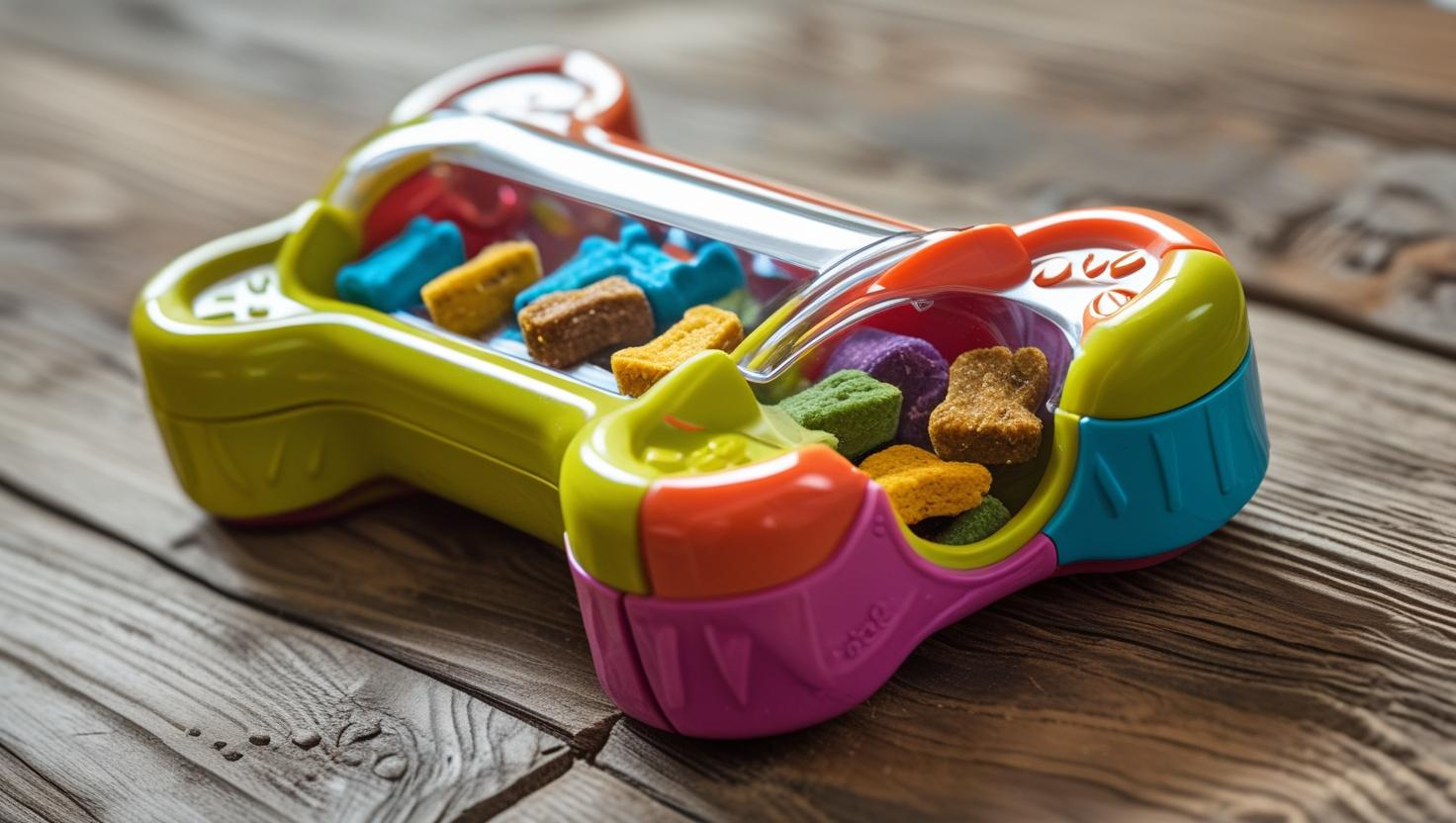
That’s where treat-dispensing toys come in.
These clever toys aren’t just for keeping your dog busy — they’re powerful tools that tap into your dog’s natural drive to hunt, sniff, and solve problems. Used intentionally, they can transform scattered energy into calm, focused behavior — whether during training, alone time, or daily routines.
In this guide, we’ll show you how to use treat-dispensing toys to improve your dog’s focus, which types work best, and how to introduce them step by step for maximum engagement.
This post contains affiliate links. If you click through and make a purchase, we may earn a small commission at no extra cost to you. We only recommend products we trust and believe will be valuable to you and your dog. Thank you for supporting our site!
Let’s get started.
🐾 Table of Contents🐾 Why Treat-Dispensing Toys Work
Treat-dispensing toys do more than hand out snacks — they stimulate your dog’s brain and encourage problem-solving behavior that builds lasting focus.
When a dog has to work to earn a reward, their mental energy shifts from chaotic to concentrated. Over time, this type of enrichment strengthens your dog’s ability to stay calm and engaged — even in distracting environments.
💡 Key Benefits:
- Builds attention span through goal-oriented play
- Reduces overstimulation and excess energy before training sessions
- Teaches impulse control, patience, and persistence
- Encourages independent focus — great for clingy or anxious dogs
Many trainers now use treat-dispensing toys as pre-training warmups or as part of a structured enrichment routine for behavior improvement.
Think of it like a puzzle for your dog’s brain — rewarding them not just with food, but with a satisfying challenge.
🐾 Types of Treat-Dispensing Toys
Not all treat-dispensing toys work the same way — and that’s a good thing. Different styles challenge your dog in different ways, which keeps them engaged and mentally flexible.
Here’s a breakdown of the main types:
| Type | Description | Best For |
|---|---|---|
| Rubber Fill Toys (e.g., KONG Classic) | Durable, hollow toys you can stuff with wet food or treats. Freeze for extra difficulty. | Crate training, chewing relief, calming routines |
| Puzzle Toys (e.g., Outward Hound Brick) | Dogs slide, lift, or spin components to reveal treats. | Mental enrichment, scent work, mealtime games |
| Rolling Dispensers (e.g., Bob-A-Lot) | Weighted or bouncy toys that release kibble as the dog rolls them. | High-energy dogs, slowing down fast eaters |
| Snuffle Mats | Fabric mats with folds and pockets where you hide treats. | Natural foraging, stress relief, slower feeding |
| Lick Mats & Pads | Textured silicone mats for spreading soft foods like peanut butter or yogurt. | Soothing focus, grooming distraction, low-mess enrichment |
| Smart Toys | Electronic treat-dispensers or app-controlled puzzles. | Advanced problem solving, solo enrichment |
Pro Tip: Rotate different types to keep your dog from getting bored and to build different focus skills.
🐾 How to Choose the Right Toy
Choosing the right treat-dispensing toy depends on your dog’s personality, energy level, and chewing style. The goal is to find something that challenges without frustrating them — and that keeps them safely engaged.
🐶 Consider These Factors:
✔️ Size & Breed
Pick a toy that fits your dog’s mouth and energy level. A small toy might be a choking hazard for a large dog, while an oversized puzzle might overwhelm a puppy.
✔️ Chewing Strength
If your dog is a heavy chewer, opt for tough rubber options (like the KONG Extreme). Softer puzzle toys or mats may not last long under pressure.
✔️ Food Motivation
Some dogs will work for kibble, while others need high-value fillers (like freeze-dried liver or peanut butter) to stay interested. Choose a toy that lets you vary the difficulty and reward type.
✔️ Activity Level
Rolling treat balls are great for energetic dogs who love movement. Snuffle mats and lick mats work better for calming focus and slower routines.
🌀 Variety Matters
Dogs thrive on novelty. Rotating 2–3 different treat-dispensing toys each week keeps things exciting and prevents burnout.
Bonus Tip: Match the toy to the moment. Use calming toys like a Lickimat before bed or vet visits, and puzzle balls before training sessions to burn off energy.
🐾 Training Tips to Build Focus
Treat-dispensing toys aren’t just for playtime — you can use them strategically to train your dog to be more focused, calm, and engaged over time.
Here’s how to turn enrichment into real behavior improvement:
🎯 1. Use as a Pre-Training Warmup
Before a training session, let your dog work on a puzzle feeder or frozen KONG for 10–15 minutes. It helps burn off excess energy and gets them into a more thoughtful, calm mindset.
Think of it like “prepping their brain” before asking for focus.
🧘 2. Practice “Go Settle” with a Mat & Toy
Pair a stuffed treat toy with a designated mat or dog bed. Cue “go settle” and reward calm behavior while your dog engages with the toy. Over time, this becomes a go-to focus spot — perfect for managing overstimulation or guests at the door.
🐾 3. Encourage Independent Focus
If your dog constantly demands your attention, try giving them a snuffle mat or rolling treat ball while you quietly do your own thing nearby. Praise them for staying focused on their own task.
🔄 4. Increase Difficulty Gradually
Start with easy wins (loose kibble in a toy), then level up with frozen fillers or more complex puzzles. This builds your dog’s mental stamina without overwhelming them.
🐶 5. Use During Triggering Situations
Use calming treat-dispensing toys (like a Lickimat) during situations that trigger stress — such as grooming, fireworks, or car rides. The act of licking or sniffing lowers cortisol and supports emotional regulation.
With consistency, these toys become more than entertainment — they become tools to shape better behavior and boost your dog’s ability to stay on task.
🐾 Best Treat-Dispensing Toys for Focus Training
| Toy | Why We Love It | Where to Buy |
|---|---|---|
| KONG Classic | The original rubber toy you can stuff and freeze for extended challenge | Buy on Amazon |
| Outward Hound Brick Puzzle | Beginner-friendly puzzle with sliding parts to reveal treats | Buy on Amazon |
| Starmark Bob-A-Lot | Weighted ball that dispenses kibble slowly as your dog plays | Buy on Amazon |
| Snuffle Mat by PAW5 | Encourages natural foraging and scent focus in a calm way | Buy on Amazon |
| Lickimat Slomo | Textured mat that promotes slow licking and helps reduce anxiety | Buy on Amazon |
To help you get started, here are some of the most effective and popular treat-dispensing toys that work great for building focus:
Reminder: Always supervise your dog with new toys, especially if they’re strong chewers.
| Toy | Best For | Durability | Difficulty Level | Buy Link |
|---|---|---|---|---|
| KONG Classic | Chewing, stuffing, freezing | High (rubber) | Medium | Amazon |
| Outward Hound Brick Puzzle | Puzzle solving, beginner level | Medium (plastic) | Low to Medium | Amazon |
| Starmark Bob-A-Lot | Slow feeding, active play | High (plastic) | Medium | Amazon |
| Snuffle Mat by PAW5 | Foraging, calm focus | Medium (fabric) | Low | Amazon |
| Lickimat Slomo | Calming licking, anxiety relief | Medium (silicone) | Low | Amazon |
🐾 Common Mistakes to Avoid
When using treat-dispensing toys to improve your dog’s focus, steer clear of these common pitfalls:
- ❌ Leaving toys out all day:
Continuous access can make the toy lose novelty and reduce its effectiveness. Instead, rotate toys and offer them at specific times. - ❌ Overfilling with treats:
Too many treats can lead to overfeeding or reduce motivation. Use portion-controlled amounts that fit your dog’s daily calorie needs. - ❌ Starting with overly difficult toys:
If the challenge is too high, your dog may get frustrated and give up. Begin simple and gradually increase difficulty. - ❌ Not supervising initially:
Some dogs may chew or swallow parts of the toy if unsupervised. Always monitor until you know your dog can use the toy safely. - ❌ Using treat toys as the only enrichment:
Balance treat-dispensing toys with other forms of mental and physical stimulation to keep your dog well-rounded and happy.
🐾 Final Thoughts
Treat-dispensing toys are fantastic tools to help your dog build focus, patience, and independent problem-solving skills. When used thoughtfully, they can transform training sessions and daily routines from stressful struggles into fun, engaging challenges that your dog looks forward to.
Remember to:
- Choose toys appropriate for your dog’s size and chewing habits
- Use them strategically as part of training and enrichment
- Rotate different types of toys to keep things fresh
- Always supervise new toys until you’re confident they’re safe
By incorporating treat-dispensing toys into your dog’s life, you’re setting the foundation for better focus, reduced anxiety, and a happier, healthier canine companion.
🐾 Want more dog enrichment and training tips? 👉 Visit our full Toys & Mental Stimulation GuideThis post contains affiliate links. If you click through and make a purchase, we may earn a small commission at no extra cost to you. We only recommend products we trust and believe will be valuable to you and your dog. Thank you for supporting our site!
One response to “How to Use Treat-Dispensing Toys to Improve Your Dog’s Focus”
I do trust all the ideas you have introduced for your post. They’re very convincing and can certainly work. Nonetheless, the posts are very quick for newbies. Could you please lengthen them a bit from subsequent time? Thank you for the post.