
If you’re wondering where your dog should sleep at night, you’re definitely not alone.
Some dogs happily curl up in their own bed. Others insist on sleeping beside their owners. Some dogs do perfectly well in a crate, while others seem to sleep best in a quiet corner of the living room.
So what is actually the best place for your dog to sleep?
The answer isn’t necessarily your bed, your bedroom, or even a crate. The best sleeping spot is the one that gives your dog a safe, comfortable, predictable place to rest while also working for your household.
For many dogs, that means having their own bed somewhere close to the family. For puppies, a crate near your bed can make nighttime easier. Older dogs may need a supportive bed that’s easy to get in and out of. And some dogs simply sleep better when they have a little more space.
The important thing is finding a setup that works consistently.
Affiliate Disclosure: This post contains affiliate links. If you purchase something through one of these links, The Doggo Life may earn a small commission at no extra cost to you. We only recommend products we believe can be useful for dogs and their owners.
Table of Contents
- Where Should Your Dog Sleep at Night?
- What Makes a Good Dog Sleeping Spot?
- Should Your Dog Sleep in Your Bedroom?
- Dog Bed vs. Crate vs. Your Bed
- Real Dog Sleeping Setups That Work
- Where Should Puppies Sleep?
- Where Should Senior Dogs Sleep?
- How to Choose the Right Setup
- Common Mistakes to Avoid
- Tips for Creating a Better Sleeping Area
- Frequently Asked Questions
- Final Recommendation
Products that I recommend
Our Pick: A Comfortable Dog Bed for Everyday Sleeping
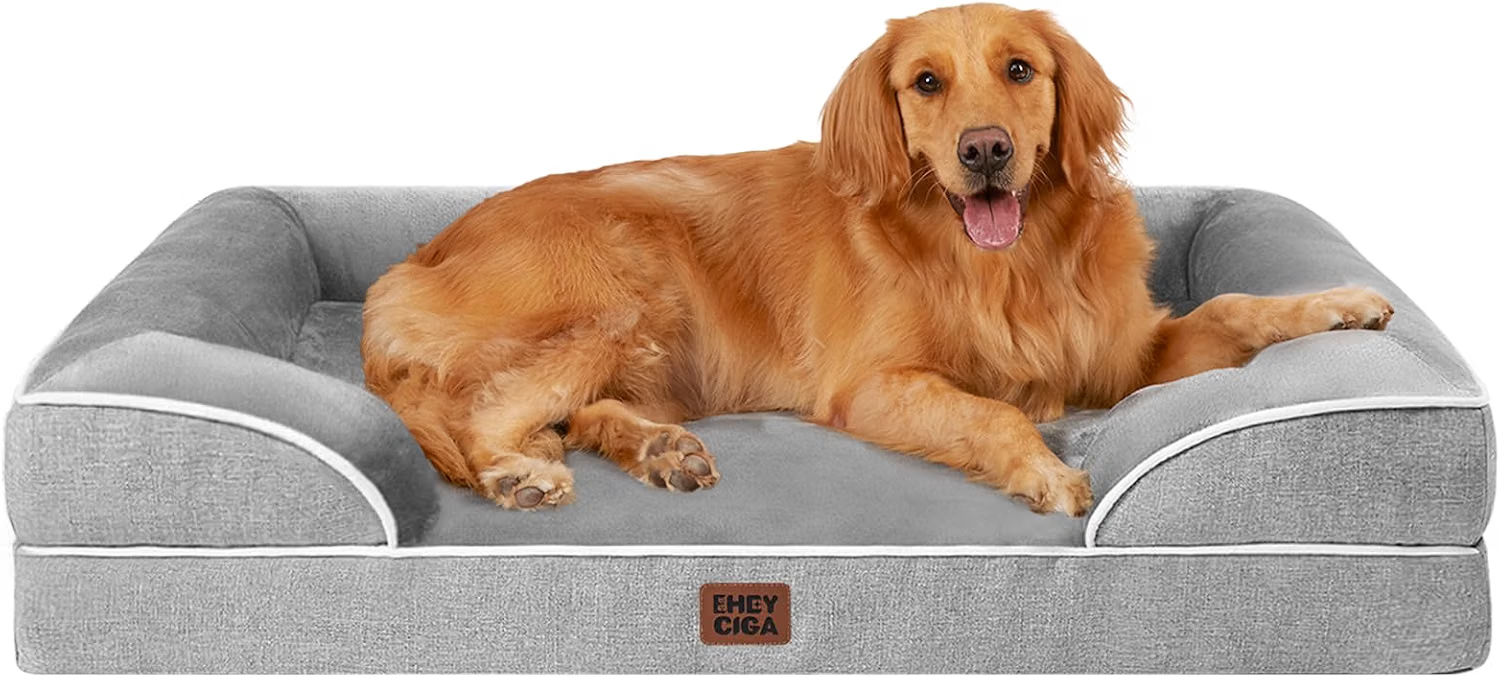
A comfortable dog bed gives your dog a dedicated place to settle down at night without taking over your own bed. Look for a size and shape that matches the way your dog normally sleeps.
Pros:
- Creates a dedicated sleeping space
- Works well for most adult dogs
- Easy to place beside your bed or in another room
Cons:
- Some dogs may still prefer the floor or furniture
- Large beds can take up considerable floor space
Price: $39.98
Affiliate Disclosure: We may earn a commission if you purchase through this link, at no additional cost to you.
1. Where Should Your Dog Sleep at Night?
For most households, a good starting point is a comfortable dog bed in a quiet, temperature-controlled area of the home.
That could be:
- Beside your bed
- At the foot of your bed
- In a bedroom corner
- In the living room
- In another calm area where your dog already likes to relax
There’s no rule saying every dog needs to sleep in exactly the same place.
In fact, dogs have different preferences. Some want to be close to their people all night. Others seem perfectly happy stretching out several feet away.
What matters is whether your dog can settle comfortably and safely.
A good sleeping area should be somewhere your dog isn’t constantly being disturbed, isn’t exposed to obvious hazards, and can access consistently every night.
For many dogs, being near their family is also helpful because dogs are social animals. Some dogs settle much more easily when they can see or hear their owners nearby.
That doesn’t necessarily mean your dog needs to sleep in your bed.
There’s a big difference between letting your dog sleep in your bedroom and letting them sleep on your mattress.
2. What Makes a Good Dog Sleeping Spot?
Before choosing a location, look at the environment.
Your dog needs more than just a soft surface.
Comfort
The sleeping surface should allow your dog to lie down naturally.
Watch how your dog normally sleeps.
Do they curl into a ball?
Stretch completely out?
Sleep on their side?
Change positions frequently?
A bed that looks great in a product photo isn’t necessarily the right bed for every dog.
Temperature
Avoid placing your dog’s bed directly beside a heating vent, drafty window, or another area with uncomfortable temperature changes.
Some dogs also prefer cooler surfaces, particularly if they tend to get warm while sleeping.
Noise
A dog may love being around the family during the day but prefer a quieter location at night.
If their bed is directly beside a television, busy hallway, or frequently used doorway, they may have trouble settling.
Safety
Look around the area from your dog’s perspective.
Are there electrical cords they could chew?
Small objects they could swallow?
Furniture they could get trapped under?
Anything unstable that could fall?
A nighttime sleeping area should be boring in the best possible way.
Consistency
Dogs generally benefit from predictable routines.
If your dog has a designated sleeping area, try to make it the same place most nights.
That gives them a familiar signal that the day is over and it’s time to settle down.
3. Should Your Dog Sleep in Your Bedroom?
For many dogs, yes, sleeping in the bedroom can be a perfectly practical arrangement.
But sleeping in your bedroom doesn’t mean your dog has to sleep on your bed.
One of the simplest setups is putting a dog bed on the floor beside your bed.
This gives your dog proximity without taking away your sleeping space.
It’s also a useful middle ground for owners who want their dog nearby but don’t want to share the mattress.
This arrangement can work particularly well for dogs that become restless when separated from their owners.
It also gives you an easy way to establish a designated sleeping spot.
You can simply teach your dog:
“This is your bed. This is where you sleep.”
If your dog already sleeps comfortably elsewhere, however, there’s no reason to move them into your bedroom simply because someone online says that’s where dogs belong.
The best setup is the one that works for both of you.
4. Dog Bed vs. Crate vs. Your Bed
The three most common nighttime choices are a dog bed, crate, or your own bed.
Each has advantages.
Dog Bed
A dog bed is probably the simplest option for an adult dog that is already house-trained and comfortable sleeping independently.
Best for:
- Adult dogs
- Dogs that don’t need confinement
- Dogs that like to stretch out
- Owners who want a designated sleeping area
A dog bed also gives you flexibility.
You can place it beside your bed, in the living room, or in another quiet part of the house.
Crate
A crate can be useful when it has already been introduced positively and your dog is comfortable using it.
For puppies, crates can provide a defined sleeping space and can be part of a nighttime routine. PetMD recommends placing a young puppy’s crate in the bedroom initially, where the puppy can be close to its owner while adjusting to the new home.
A crate can also be useful for dogs that are already crate-trained and genuinely enjoy using their crate as a resting area.
The important distinction is that a crate should be a safe, comfortable space, not simply somewhere a dog is put because the owner doesn’t want them wandering around.
Your Bed
Some owners love sleeping with their dogs.
Others absolutely don’t.
Both are understandable.
The question isn’t whether sharing a bed is automatically right or wrong.
Ask yourself:
- Does everyone sleep well?
- Is your dog comfortable?
- Is your dog able to get on and off safely?
- Does your dog respect boundaries?
- Are you happy with the arrangement long-term?
If the answer is yes, sharing the bed may work for your household.
If you’re constantly being kicked awake at 3 a.m., however, it may be time for your dog to get their own sleeping space.
5. Real Dog Sleeping Setups That Work
Instead of looking for one perfect answer, consider these common setups.
Setup #1: Dog Bed Beside Your Bed
This is one of the easiest arrangements for many adult dogs.
Your dog has their own space but remains close to you.
Best for: dogs that like being near their owners.
Setup #2: Crate Beside Your Bed
This can be particularly useful for a new puppy that’s learning nighttime routines.
It allows the puppy to be close while maintaining a separate sleeping area.
Best for: puppies and appropriately crate-trained dogs.
Setup #3: Dog Bed in the Living Room
Some dogs sleep perfectly well in the living room once everyone goes to bed.
This can be ideal if the living room is quiet and your dog already considers it their comfortable area.
Best for: independent adult dogs.
Setup #4: Gated Sleeping Area
For dogs that shouldn’t have access to the entire house at night, an indoor gate can create a defined area.
For example, you might give your dog access to part of the living room rather than allowing them to wander through the kitchen, bedrooms, and hallway.
Best for: dogs that need more room than a crate but still need boundaries.
Setup #5: Supportive Bed in an Easy-to-Reach Location
Older dogs may benefit from having their bed on the same floor where the family spends most of the night.
A supportive bed that’s easy to step onto can be much more practical than expecting an older dog to repeatedly climb stairs or jump onto furniture.
Best for: senior dogs and dogs that prefer a lower sleeping surface.
6. Where Should Puppies Sleep?
Puppies are different from adult dogs.
They are adjusting to a new home, learning house rules, and often still working on nighttime bathroom routines.
A dedicated sleeping space is important.
A properly introduced crate is one option, particularly when crate training is part of the puppy’s routine. Keeping the crate near your bed initially can also make it easier to hear when the puppy needs attention during the night.
Another option is a puppy-proofed area with a comfortable bed and appropriate boundaries.
The biggest mistake is giving a young puppy complete freedom of the house overnight before they’re ready.
A puppy that’s loose throughout the house can find plenty of things to chew, knock over, or investigate.
Nighttime should be predictable.
A simple routine might look like:
- Final bathroom trip
- Calm activity
- Lights and activity begin winding down
- Puppy goes into their designated sleeping area
- Household settles down for the night
Consistency matters more than creating an elaborate setup.
7. Where Should Senior Dogs Sleep?
Senior dogs often need a different setup than puppies or young adults.
Think about accessibility first.
If your older dog struggles with stairs, jumping, or getting up from hard flooring, put their sleeping area somewhere they can reach easily.
A supportive dog bed can also be worth considering.
You don’t necessarily need to put your senior dog in your bedroom if their favorite sleeping area is elsewhere.
Instead, look at what their body is telling you.
If they keep choosing the floor next to your bed, that’s useful information.
If they repeatedly move away from a thick, warm bed and choose a cooler floor, they may simply prefer a different sleeping surface.
Let your dog’s behavior help guide the decision.
8. How to Choose the Right Setup
If you’re still unsure, answer these five questions.
1. Does your dog sleep well already?
If yes, don’t fix something that isn’t broken.
2. Does your dog need boundaries at night?
If yes, consider a crate or gated area.
3. Does your dog want to be close to you?
If yes, try putting their bed in your bedroom.
4. Is your dog older or less mobile?
If yes, prioritize easy access and supportive bedding.
5. Is your current setup disturbing your sleep?
If yes, it’s okay to change it.
Your dog’s sleeping arrangement doesn’t have to be permanent.
You can try a dog bed beside your bed for a week. If everyone sleeps better, you’ve found something useful.
If your dog spends the entire night wandering back and forth, you may need to rethink the location.
9. Common Mistakes to Avoid
Mistake #1: Choosing the Bed Before Choosing the Location
A $200 dog bed won’t solve a location problem.
If it’s sitting beside a loud television or in the middle of a busy hallway, your dog may still refuse to use it.
Choose the location first.
Mistake #2: Assuming Every Dog Wants to Sleep in Your Bed
Some dogs love it.
Others prefer their own space.
Don’t assume your dog needs to share your mattress simply because other dogs do.
Mistake #3: Moving the Sleeping Area Constantly
If your dog finally settles into a routine, constantly moving their bed around can make things unnecessarily confusing.
Find a practical location and stick with it.
Mistake #4: Giving a Puppy Too Much Freedom
Young puppies aren’t ready for unrestricted nighttime access to the house.
A controlled, puppy-proofed sleeping area is much easier to manage.
Mistake #5: Ignoring What Your Dog Is Telling You
If your dog consistently gets out of their bed and chooses another location, pay attention.
They may be too hot, too cold, uncomfortable, disturbed, or simply prefer another surface.
10. Tips for Creating a Better Sleeping Area
You don’t need to completely redesign your house for your dog.
Start small.
Keep the area clean. Wash bedding regularly and remove hair and dirt.
Give your dog enough room. Their bed should accommodate their normal sleeping position.
Reduce nighttime distractions. Avoid placing the bed directly in a busy walkway.
Keep essentials nearby when appropriate. Older dogs or dogs with mobility limitations may benefit from having easy access to the areas they need.
Make the spot predictable. Use the same area consistently.
Don’t force the dog to use it. Encourage the space rather than turning it into a battle.
Watch your dog’s sleeping habits. Their preferred location can tell you a lot about what they find comfortable.
11. Frequently Asked Questions
Should my dog sleep in my bedroom?
Your dog can sleep in your bedroom if that arrangement works for both of you. A dog bed beside your bed is a simple alternative to allowing your dog on the mattress.
Is it better for a dog to sleep in a crate or bed?
It depends on the dog. A crate can be useful for puppies and dogs that are already comfortable with crate training. An adult dog that sleeps independently may do perfectly well with a dog bed.
Should puppies sleep in a crate?
A properly introduced crate can be a useful part of a puppy’s nighttime routine. Keeping it near your bedroom initially can also help the puppy adjust and allow you to hear when they need attention.
Should my dog sleep on the floor?
If your dog is comfortable and the floor is safe and temperature-appropriate, they may choose it. Some dogs naturally prefer a cooler, harder surface.
Where should a senior dog sleep?
Choose an easily accessible location with a comfortable, supportive bed. Avoid making an older dog repeatedly climb stairs or jump onto high furniture if mobility is becoming difficult.
12. Final Recommendation
So, where should your dog sleep at night?
The answer might surprise you because it doesn’t have to be one specific place.
Your dog doesn’t automatically need to sleep in your bed.
They don’t automatically need to sleep in a crate.
And they don’t necessarily need to sleep in another room.
Start with your dog’s needs and your household’s routine.
For a puppy, a properly introduced crate near your bedroom can be a practical starting point.
For a well-trained adult dog, a comfortable bed beside your own may be all they need.
For an independent dog, a quiet living-room sleeping area can work perfectly well.
For an older dog, focus on comfort and easy access.
And if you’re unsure, start with a comfortable dog bed in a quiet area where your dog can still feel connected to the family.
You can always adjust the setup once you see how your dog responds.
The goal isn’t to create the “perfect” Instagram-worthy dog bedroom.
It’s much simpler than that.
Create a safe, comfortable place where your dog can settle down and sleep well—and find the setup that works for both of you.
Leave a Reply