
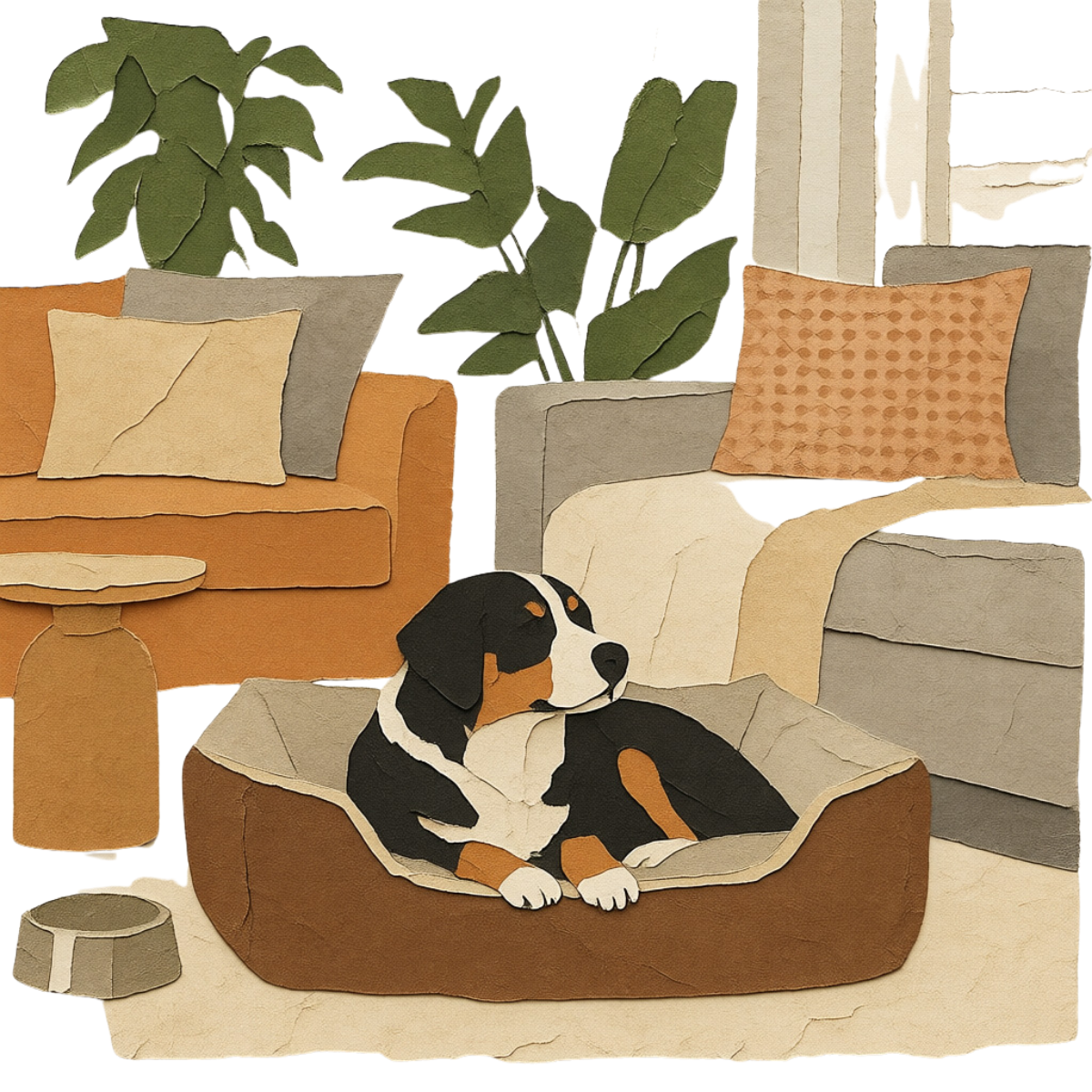
How to Make Your Living Room More Dog-Friendly Without Making It Look Like a Kennel
Living with a dog doesn’t mean your living room has to be covered in dog beds, toys, blankets, gates, and mismatched pet supplies. Dog-friendly living room is the way to go.
I’ve found that the biggest difference usually isn’t buying more dog products. It’s figuring out where everything belongs and creating a setup that works for both you and your dog.
A dog-friendly living room should give your dog a comfortable place to relax, enough room to move around, and easy access to the things they actually use. At the same time, it should still feel like a living room—not a dedicated dog room.
The good news is that you can usually accomplish this without completely redesigning the space.
Affiliate Disclosure
Some of the products mentioned in this article may contain affiliate links. If you purchase something through one of these links, The Doggo Life may earn a small commission at no additional cost to you. We only recommend products that fit the problem or setup being discussed.
Table of Contents
- What Makes a Living Room Dog-Friendly?
- Start With Your Dog’s Actual Habits
- Create a Dedicated Dog Zone
- Put the Dog Bed in the Right Location
- Make Toys Look Less Like Clutter
- Choose Furniture Placement Carefully
- Protect Your Furniture Without Covering Everything
- Don’t Forget the Floor
- Create a Better Food and Water Setup
- Dog-Friendly Living Rooms for Different Situations
- What Dog Owners Are Usually Struggling With
- Mistakes to Avoid
- Tips for Keeping the Room Looking Good
- FAQ
- Final Recommendation
What Makes a Living Room Dog-Friendly?
A dog-friendly living room isn’t necessarily one that contains the most pet products.
It’s a room where your dog can comfortably exist without constantly getting in the way of people, knocking things over, chewing something they shouldn’t, or being pushed out of the room because there’s nowhere appropriate for them to settle.
A good setup usually has five things:
- A comfortable place for your dog to rest
- A clear path through the room
- A designated place for toys and dog supplies
- Surfaces that can handle normal dog messes
- Furniture arranged around how your dog actually uses the room
That last point matters more than it sounds.
It’s easy to look at a picture online and think, “That would make a great dog-friendly living room.”
But your dog doesn’t care whether the room looks good in a photograph.
They care about where they can sleep, where they can see what’s happening, how easily they can get outside, and whether they have enough room to move around.
So start with your dog—not the furniture.
Start With Your Dog’s Actual Habits
Before moving anything, watch what your dog already does.
Where do they naturally sleep?
Do they follow you around the room?
Do they spend most of their time near the couch?
Do they like looking out a window?
Do they lie directly in front of the television?
Do they constantly walk between the living room and another room?
These habits give you useful information.
If your dog already has a favorite corner, there’s probably a reason for it. Maybe it’s quieter. Maybe there’s less foot traffic. Maybe they can see everyone from that spot.
Instead of fighting that behavior, build around it.
I’ve found that trying to force a dog to use a particular area simply because it looks better usually doesn’t work for long.
A beautiful dog bed sitting in an unused corner isn’t much help if your dog prefers sleeping next to the couch.
Create a Dedicated Dog Zone
One of the easiest ways to make a living room feel more organized is to give your dog a defined area.
This doesn’t have to be a huge section of the room.
A dog zone might simply include:
- A bed
- A washable blanket
- A small toy basket
- A nearby water bowl
- A few favorite toys
The trick is to keep the area visually simple.
Instead of having dog supplies scattered throughout the room, concentrate them in one location.
For example, a neutral-colored dog bed beside the sofa can look like part of the furniture arrangement instead of an obvious pet station.
A simple storage basket can also make a huge difference. Rather than seeing tennis balls, ropes, stuffed toys, and chew toys scattered across the floor, you have one place to put them when they’re not being used.
This is one of those changes that costs very little but can make the room feel dramatically less cluttered.
Put the Dog Bed in the Right Location
The dog bed is probably the most obvious piece of pet furniture in your living room, so placement matters.
Don’t automatically put it in the farthest corner.
Most dogs want to be near their people.
A good location is often somewhere that allows your dog to relax while still seeing what’s happening in the room.
Beside the sofa is a good example.
Your dog gets their own resting space while remaining close to you.
You should also consider traffic.
If people constantly walk through the area, your dog may avoid the bed altogether. A bed placed directly beside a doorway might look convenient but can become an obstacle for both the dog and everyone walking through the room.
Try to find the balance between close to the family and out of the main traffic path.
For older dogs, puppies, or dogs that have difficulty getting comfortable, the surface and accessibility of the bed become even more important.

A Comfortable Dog Bed That Fits Into Your Living Room
A dedicated dog bed gives your dog a comfortable place to settle while keeping their resting area defined. Look for a style that is comfortable, washable, and easy to work into the room rather than something that takes over the space.
Price: $39.99
Pros:
- Comfortable designated resting space
- Works well beside a sofa or chair
- Can help keep your dog’s sleeping area contained
Cons:
- Large beds can take up considerable floor space
- May require regular washing
Affiliate disclosure: This is an affiliate link. If you purchase through it, we may earn a small commission at no additional cost to you.
Make Toys Look Less Like Clutter
Dog toys have a way of taking over a living room.
You start with three toys.
Somehow there are twenty.
The easiest solution isn’t necessarily buying a bigger toy collection. It’s giving the toys a home.
A simple basket beside the dog’s bed works well.
You don’t need to keep every toy on the floor all day.
Keep a few favorites available and rotate the others.
This also gives older toys a break and can make familiar toys interesting again when they come back into rotation.
The goal isn’t to eliminate toys from the room. It’s to make them look intentional.
A basket that matches the general style of the room can function as both pet storage and normal household storage.

A Simple Way to Keep Dog Toys Under Control
If dog toys are constantly scattered around the living room, a dedicated storage basket can make the space feel much more organized. Keep it near your dog’s bed so putting toys away becomes part of the normal routine.
Price: $22.99
Pros:
- Keeps toys contained in one location
- Easy for the whole family to use
- Can blend into normal home décor
Cons:
- Not ideal for dogs that chew storage baskets
- Smaller baskets can fill quickly
Affiliate disclosure: This is an affiliate link. If you purchase through it, we may earn a small commission at no additional cost to you.
Choose Furniture Placement Carefully
Your furniture arrangement has a huge impact on whether your dog can comfortably use the room.
One common mistake is filling every available section of floor space with furniture.
That may look good from a decorating perspective, but it can create narrow pathways that dogs have to squeeze through.
Instead, think about how your dog moves.
If your dog regularly walks from the couch to the door, don’t block that route with unnecessary furniture.
If they like to follow you between rooms, leave enough open space for them to move without constantly bumping into tables and chairs.
This becomes especially important with large dogs.
A Great Dane moving through a tiny pathway is a completely different situation from a small dog walking around the same room.
The best layout isn’t necessarily the one that fits the most furniture.
It’s the one that leaves enough useful floor space for everyone.
Protect Your Furniture Without Covering Everything
Dogs are dogs.
Even the cleanest dog can eventually put muddy paws on the sofa, shed hair across a chair, or decide that a particular cushion is the perfect place to sleep.
But you don’t necessarily need plastic covers over everything.
Instead, protect the areas that actually need protection.
A washable throw over a favorite section of the sofa can be much more practical than covering the entire couch.
If your dog has a specific spot they always use, protect that spot.
This is another area where observing your dog’s habits saves you money.
Don’t protect furniture from problems your dog doesn’t actually cause.
Focus on the surfaces that receive the most wear.
Don’t Forget the Floor
Flooring is one of the biggest considerations in a dog-friendly living room.
Dogs track in dirt, shed hair, spill water, and occasionally have accidents.
A washable rug can make a living room more comfortable while also providing an easier surface to clean.
But don’t choose a rug purely because it looks good.
Think about:
- How easily it can be cleaned
- Whether dog hair will be difficult to remove
- Whether it slides around
- Whether the material can handle your dog’s nails
- Whether the pattern hides normal everyday messes
A rug that requires special treatment every time your dog walks across it may become more trouble than it’s worth.
Practical doesn’t have to mean unattractive.
There are plenty of ways to make the floor comfortable and visually appealing without choosing something that can’t survive normal dog life.

A Washable Rug Makes Dog Messes Easier to Manage
A living-room rug can make the space more comfortable, but dogs also bring dirt, hair, and occasional spills with them. A washable option can make everyday cleanup considerably easier.
Price: $34.99
Pros:
- Designed for easier cleanup
- Adds comfort without sacrificing practicality
- Useful for homes with shedding dogs
Cons:
- Large sizes can be more expensive
- Some rugs may still require frequent cleaning
Affiliate disclosure: This is an affiliate link. If you purchase through it, we may earn a small commission at no additional cost to you.
Create a Better Food and Water Setup
If your dog’s food and water bowls are in the living room, don’t simply put them wherever there’s an empty spot.
Water bowls can create surprisingly annoying problems.
Dogs splash.
Water gets onto floors.
Bowls get pushed around.
And eventually somebody steps in it.
Place the water station somewhere accessible but outside the main walking path.
A mat underneath the bowls can also make cleanup easier.
If your dog eats in the living room, try keeping the feeding area visually separate from the primary seating area.
You don’t need a complicated setup.
You just need one that prevents the feeding station from becoming another source of clutter.
Dog-Friendly Living Rooms for Different Situations
There isn’t one perfect layout for every dog owner.
If You Have a Small Living Room
Don’t try to create a giant dog zone.
Use vertical or compact storage and choose a bed that fits naturally beside existing furniture.
The goal is to give your dog a defined space without consuming the entire room.
If You Have a Large Dog
Prioritize open floor space.
Large dogs need room to stand, turn around, stretch out, and move between areas.
Avoid filling the room simply because you have the space.
That extra open floor may be more useful to your dog than another decorative table.
If You Have a Puppy
Expect the room to change.
Puppies explore everything.
Keep tempting objects, cords, small decorative items, and other hazards out of reach.
A puppy-friendly living room is usually more about management than decoration.
You can make the room prettier later.
If You Have an Older Dog
Comfort and accessibility become more important.
Keep their resting area easy to reach and avoid layouts that require them to navigate unnecessary obstacles.
If your dog struggles with slippery flooring, consider whether rugs or runners can provide better footing.
If You Have Multiple Dogs
Don’t assume one bed is enough.
Some dogs happily share space. Others prefer their own resting areas.
Watch how your dogs interact and provide enough room for each dog to settle without constantly competing for the same spot.
What Dog Owners Are Usually Struggling With
The problem usually isn’t that people don’t want a dog-friendly living room.
It’s that they don’t want to choose between having a comfortable dog and having a comfortable home.
They want their dog beside them.
They also want:
- A clean-looking room
- Furniture that isn’t constantly covered
- Less toy clutter
- Easier cleanup
- A space that still feels like their own
That’s why the best solution isn’t buying more pet furniture.
It’s creating a system.
Give your dog a place to sleep.
Give their toys a place to go.
Protect the surfaces that actually need protection.
Keep pathways open.
And make cleanup easy.
Once those pieces are handled, the room usually becomes much easier to manage.
How to Fix the Problem
If your living room currently feels like your dog’s belongings have taken over, don’t try to fix everything in one afternoon.
Start with the floor.
Pick up every toy, blanket, bowl, and miscellaneous dog item.
Then decide what your dog actually uses.
Create one primary dog zone.
Put the bed there.
Place a toy basket nearby.
Move the water bowl somewhere practical.
Then look at the furniture.
Ask yourself:
Can my dog easily move from their bed to the door, the couch, and the rest of the room?
If the answer is no, move something.
Next, identify the areas that actually get dirty or damaged.
Those are the areas worth protecting.
You don’t need to cover everything.
You need to protect the things your dog actually affects.
Mistakes to Avoid
1. Putting the dog bed wherever there’s leftover space
Your dog may never use it.
Choose a location based on their habits.
2. Blocking the main walking paths
Furniture should work for both humans and dogs.
3. Buying too many pet products
More products don’t automatically create a better setup.
4. Leaving every toy on the floor
A toy basket takes seconds to use and makes the entire room look more organized.
5. Choosing style over practicality
A beautiful rug that can’t handle your dog’s everyday life isn’t a good investment.
6. Trying to make the room completely dog-proof
You live with a dog.
Some evidence of that is normal.
The goal is a comfortable home—not a showroom.
Tips for Keeping a Dog-Friendly Living Room Looking Good
Once you have the layout right, maintenance becomes much easier.
Keep the dog zone consistent.
Don’t constantly move the bed and supplies around.
Rotate toys.
Keep the most-used toys accessible and store the rest.
Wash bedding regularly.
A washable cover makes this much easier.
Vacuum before the room looks dirty.
Regular quick cleaning is easier than waiting until hair and dirt build up.
Keep a cleaning solution nearby.
When something gets spilled or tracked inside, dealing with it immediately is much easier.
Use furniture protection strategically.
Protect the areas your dog actually uses rather than covering everything.
Leave open floor space.
It makes the room easier for both you and your dog to use.
FAQ
How do I make my living room dog-friendly?
Start by creating a dedicated dog zone with a comfortable bed, toy storage, and easy access to the rest of the room. Then arrange furniture so your dog has clear paths through the space.
Where should I put my dog’s bed in the living room?
A good location is usually close enough to the family that your dog doesn’t feel isolated but far enough from major walkways that they won’t constantly be disturbed.
How can I keep my living room from looking cluttered with dog toys?
Use one attractive basket or storage container and keep only a few toys out at a time. Rotate the rest.
What is the best flooring for a dog-friendly living room?
The best option depends on your home, but easy-to-clean flooring combined with washable rugs can make everyday dog messes much easier to manage.
Should my dog have their own area in the living room?
Usually, yes. A defined area gives your dog a consistent place to rest while keeping their supplies from spreading throughout the room.
Final Recommendation
You don’t need to turn your living room into a dog room to make it comfortable for your dog.
The best dog-friendly living rooms usually follow a simple idea:
Give your dog a place, not the whole room.
Create one comfortable resting area. Keep their toys contained. Protect the furniture they actually use. Leave clear walking paths. Make the surfaces easy to clean.
Most importantly, build the room around how your dog actually behaves, rather than trying to create a picture-perfect setup.
That’s what makes a dog-friendly living room work in real life.
If you’re unsure where to start, start with the dog bed and create the rest of the setup around it.
Your dog gets a comfortable place to relax, you get a more organized room, and the house can still look like a home.
Need to Create a Defined Dog Zone?
If you need to keep your dog in a specific part of the room without making the space feel closed off, an indoor dog gate or safe-zone barrier can be a practical solution. See our guide to the best indoor dog gates and safe-zone barriers for different home layouts.
Leave a Reply