
Affiliate Disclaimer: This post may contain affiliate links. If you purchase through these links, I may earn a small commission at no extra cost to you.
Crate training gets a bad reputation when it’s done wrong. A lot of dogs end up seeing their crate as a stressful box instead of what it should be—a safe, calm den they can actually relax in.
The difference usually isn’t the dog… it’s the setup.
When a crate is too bare, too noisy, too bright, or just uncomfortable, dogs resist it. You’ll see whining, scratching, refusal to enter, or even anxiety behaviors that spill into the rest of the home. But when it’s set up properly, most dogs naturally start choosing it on their own.
This guide breaks down how to turn any crate into a comfort zone using simple adjustments, smart layering, and a few key products that make a noticeable difference in calmness and behavior.
🐾 Table of Contents
- 🐾 Why Your Dog’s Crate Might Be Causing Stress
- 🐾 The Psychology Behind a Comfortable Dog Crate
- 🐾 Step-by-Step Dog Crate Setup for Calm Behavior
- 🐾 Must-Have Comfort Essentials for Any Crate
- 🐾 Calming Products That Actually Help Anxious Dogs
- 🐾 Common Crate Mistakes That Make Anxiety Worse
- 🐾 How to Get Your Dog to Actually Love Their Crate
- 🐾 Final Thoughts: Building a Safe Space That Works
Why Your Dog’s Crate Might Be Causing Stress
Most crate problems come from setup, not training failure.
A crate that feels stressful usually has one or more of these issues:
- No soft bedding or uncomfortable flooring
- Too much exposure (no privacy or den-like feel)
- Poor placement in the house (isolated or noisy areas)
- Negative associations (only used for punishment or alone time)
- Lack of enrichment or calming elements
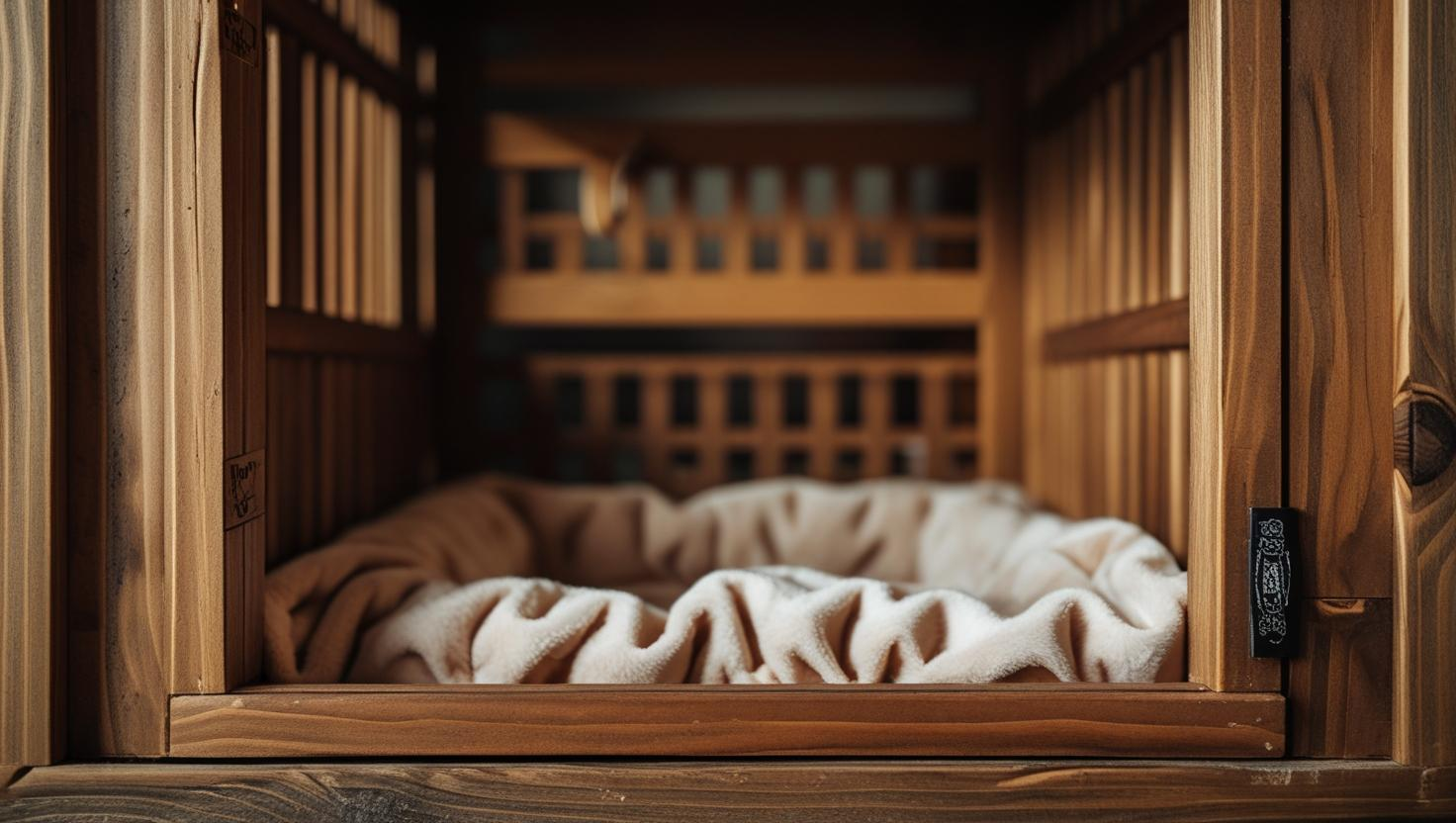
Dogs are naturally den animals, but a crate only feels like a den when it’s designed that way.
The Psychology Behind a Comfortable Dog Crate
Dogs don’t relax just because they’re “told” to.
They relax when their environment signals:
- Safety
- Warmth
- Predictability
- Low stimulation
Think of it like a personal sleep space. If it’s too bright, too hard, or too exposed, the brain stays alert. If it’s soft, enclosed, and familiar, the nervous system drops into rest mode.
That’s what we’re building here—a low-stress environment that your dog chooses willingly.
Step-by-Step Dog Crate Setup for Calm Behavior
Start simple, then layer comfort:
1. Choose the right location
Place the crate in a low-traffic but not isolated area. Dogs want to feel part of the household.
2. Add a supportive base layer
A crate mat or orthopedic pad reduces pressure points and makes lying down comfortable.
3. Create softness without overheating
Use a washable blanket or crate-safe bed that allows nesting without trapping too much heat.
4. Reduce visual stress
If your dog is easily overstimulated, partially covering the crate can create a den-like feel.
5. Add calm reinforcement
Introduce safe chew toys or lick mats to build positive association.
Must-Have Comfort Essentials for Any Crate
These are the core items that make the biggest difference:
- Orthopedic crate bed for joint support
- Non-slip crate mat for stability
- Washable blanket for comfort layering
- Water-safe bowl or attachable dispenser
- Durable chew toy for calming engagement
These basics alone can completely change how your dog feels about their crate.

🛏️ Orthopedic Crate Bed for Maximum Comfort
If your dog avoids the crate, the first thing to fix is comfort under their body. A thin or hard crate floor creates pressure points that make resting stressful instead of relaxing.
This type of orthopedic crate bed helps support joints, reduce stiffness, and makes the crate feel like a true resting space.
💲76.49 Price: $25 – $70 (varies by size & brand)
👍 Pros:
✔ Supports joints and pressure points
✔ Helps anxious dogs settle faster
✔ Fits most standard crates
👎 Cons:
✘ Chewing risk for puppies
✘ Needs regular washing
Affiliate Disclaimer: This post contains affiliate links. If you purchase through these links, I may earn a commission at no extra cost to you.
👉 Check Price on AmazonCalming Products That Actually Help Anxious Dogs
Some dogs need a little extra help settling in, especially during early crate training.
Helpful options include:
- Calming pheromone sprays
- Weighted or anxiety-reducing crate bedding
- Slow-feeding lick mats
- White noise or soft background sound
- Comfort toys with familiar scent retention
Used correctly, these don’t replace training—they support it.

😌 Calming Support Spray for Crate Anxiety
Some dogs don’t struggle with comfort—they struggle with stress. Calming sprays and pheromone-based aids can help reduce nervous energy and make crate time easier to accept.
These products work best when paired with a proper crate setup, not used alone as a fix.
💲19.99 Price: $15 – $40
👍 Pros:
✔ Helps reduce crate-related anxiety
✔ Easy to use (spray or diffuser)
✔ Works well during transition training
👎 Cons:
✘ Not effective for all dogs
✘ Works best when combined with training
Affiliate Disclaimer: This post contains affiliate links. If you purchase through these links, I may earn a commission at no extra cost to you.
👉 View Calming OptionsCommon Crate Mistakes That Make Anxiety Worse
A few small mistakes can undo all your progress:
- Using the crate only for punishment
- Skipping comfort bedding altogether
- Leaving the dog in too long too quickly
- Making the crate feel like isolation instead of rest
- Constantly changing crate setup (no consistency)
Consistency is what builds trust.

🧠 Lick Mats & Chew Toys for Crate Engagement
One of the easiest ways to help a dog relax in a crate is to redirect their focus. Lick mats and safe chew toys create calm, repetitive behavior that naturally lowers stress.
This turns crate time into something positive instead of something to resist.
💲17.99 Price: $10 – $30
👍 Pros:
✔ Reduces boredom and anxiety
✔ Builds positive crate association
✔ Helps during training periods
👎 Cons:
✘ Needs supervision with aggressive chewers
✘ Can get messy (food-based mats)
Affiliate Disclaimer: This post contains affiliate links. If you purchase through these links, I may earn a commission at no extra cost to you.
👉 Shop Enrichment ToysHow to Get Your Dog to Actually Love Their Crate
This part is about association, not force.
Start by:
- Feeding meals near or inside the crate
- Leaving the door open during calm time
- Rewarding voluntary entry
- Keeping crate time short and positive at first
The goal isn’t compliance—it’s choice.
When a dog chooses the crate on their own, you’ve done it right.
Final Thoughts: Building a Safe Space That Works
A well-set-up crate isn’t about restriction—it’s about giving your dog a place where they can fully relax without pressure.
When you combine comfort, consistency, and calm reinforcement, the crate stops being a struggle and becomes part of your dog’s natural routine.
And that’s when training starts to feel effortless instead of forced.
🔗 Related Guides to Support Your Dog Crate Setup
- 👉 Dog Training & Behavior Guides (Train That Pup Hub)
Build foundational obedience skills that make crate training smoother and more effective. - 👉 Dog Anxiety & Calming Support Hub
Perfect for dogs that struggle with separation stress or crate-related anxiety. - 👉 Dog Home Alone Setup Guide
Learn how to create safe, structured environments when your dog is left alone. - 👉 Dog Comfort & Weather Protection Gear
Helps improve overall comfort by managing temperature and environment stress. - 👉 Interactive Dog Toys for Mental Stimulation
Reduces boredom and helps prevent crate frustration through healthy engagement.